
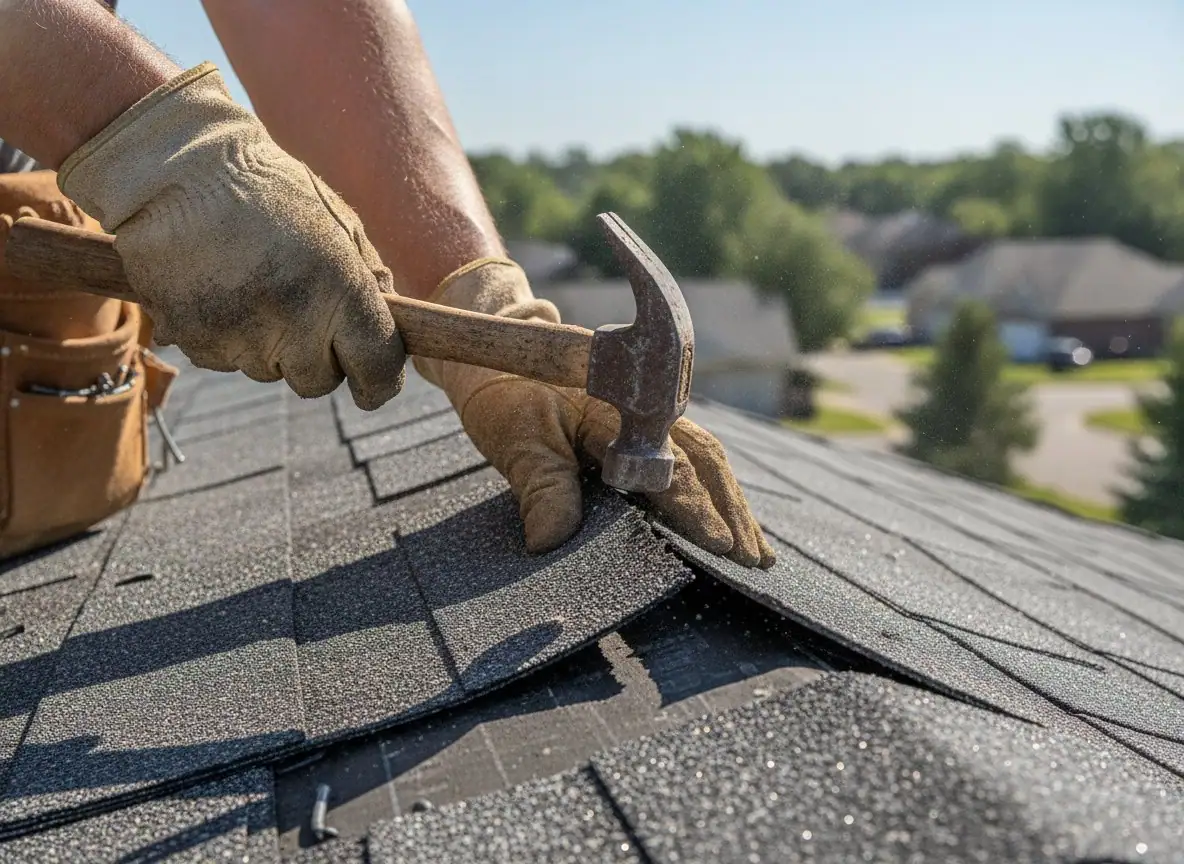
Emergency Roofing in Cary, NC
Emergency roofing help is available 24/7 from Cary Roofing Company. Call (919) 762-6226 any time, day or night, if your roof is leaking or was damaged in a storm. We serve homes and businesses in Cary and nearby communities, including Raleigh, Durham, Apex, Morrisville, Holly Springs, Garner, Chapel Hill, Fuquay-Varina, and Clayton. We handle active leaks, storm and tree damage, and torn-off shingles. We install emergency roof tarps and temporary patches, and we help with insurance claims.
Tarping or patching a damaged roof quickly keeps water out of ceilings, insulation, and framing until a permanent repair can be made. This page explains what to do right now without climbing onto your roof, how our tarping works, what affects cost, and how to document the damage for insurance.
What counts as a roofing emergency?
A roofing emergency is any damage that lets water into the building now or leaves the roof open to the next rain.
Not every roof problem needs a crew at midnight, but these do:
- Active leaks: water dripping through ceilings, running down walls, or pooling around light fixtures.
- Storm impacts: shingles torn off by wind, hail punctures, or a fallen tree limb lying on or through the roof.
- Exposed decking: bare plywood or OSB showing where shingles and underlayment have blown away. Decking alone does not shed water for long.
- Sagging or bulging ceilings: a sign that water is collecting above the drywall.
- Damaged flashing: flashing pulled loose around chimneys, skylights, or walls during a storm, especially when more rain is in the forecast.
- Commercial roof failures: membrane punctures, open seams, or ponding water that is reaching occupied space or equipment.
Read moreShow less
Some problems can usually wait for a scheduled visit: a few granules in the gutter, one lifted shingle with no leak, or an old stain that is not growing. If you are unsure, call and describe what you see. In the meantime, the first priority is controlling the water inside.
How to stop a leaking roof during heavy rain?
During heavy rain, you stop the damage from inside the house. Contain the water, protect people and belongings, and call for emergency roof leak repair. Do not go up on the roof.
Wet shingles, wind, lightning, and darkness make roofs dangerous even for trained crews. Use this checklist from the ground and the interior:
- Stay off the roof and off ladders while it is raining, windy, or dark.
- Turn off power to affected areas at the breaker if water is near light fixtures, ceiling fans, or outlets. Do not touch wet electrical components.
- Catch the water with buckets, bins, or trash cans. Put a towel in the bottom to cut down on splashing.
- Relieve a bulging ceiling only if it is not near a fixture. Place a bucket underneath and puncture the lowest point with a screwdriver so the water drains in one spot instead of bringing down the drywall.
- Move or cover belongings with plastic sheeting, especially electronics, documents, and furniture.
- Keep people and pets clear of rooms with sagging ceilings.
- Take photos and video of the leak, the ceiling, and any visible exterior damage you can see from the ground.
- Call (919) 762-6226 to request emergency roof tarping or a temporary patch.
Once the water inside is under control, most people's next question is whether a tarp will stop the leak.
Free, no-obligation estimates
Talk to Cary Roofing Company
Tell us what you need and we’ll take it from there.
Can I put a tarp on my roof to stop leaks?
Yes, a properly installed tarp is the standard way to stop roof leaks temporarily. Getting it right takes safe conditions, the right materials, and correct placement, so we recommend a professional emergency roof tarp service rather than doing it yourself.
Most failed DIY tarps share a few mistakes:
- Too small: the tarp has to cover well past the damaged area and extend over the ridge so water runs over it instead of under it.
- Weighted with bricks or tires: wind lifts the edges, drives rain underneath, and can throw the weights off the roof.
- Nailed straight through the tarp: bare nail holes become new leaks and tear in wind.
- Wrong orientation: laps that face uphill channel water under the tarp.
- Installed in unsafe conditions: falls from wet roofs cause serious injuries.
If you are looking for "roof tarping near me" because a storm opened your roof, the safer choice is to let a crew install it once conditions allow. Here is how ours works.
How does our 24/7 emergency roof tarping work?
You call our 24/7 line, we gather the details and schedule a crew, and the crew secures the damaged area with a tarp or temporary patch, then sets up a free inspection for the permanent repair.
Arrival times depend on weather, storm volume, and location, so we will tell you what to expect when you call instead of promising a fixed time. The process:
- Phone intake: we ask where water is coming in, what caused the damage, and whether anything is unsafe, such as downed lines or a tree on the roof.
- Safety check on arrival: the crew looks at the roof from the ground first. If lightning, high wind, or a large tree makes the roof unsafe, we focus on interior protection and plan the tarp for the earliest safe window.
- Damage assessment: we find the openings, missing shingles, exposed decking, and failed flashing.
- Debris removal: we clear loose shingles and branches so the tarp lies flat and does not tear.
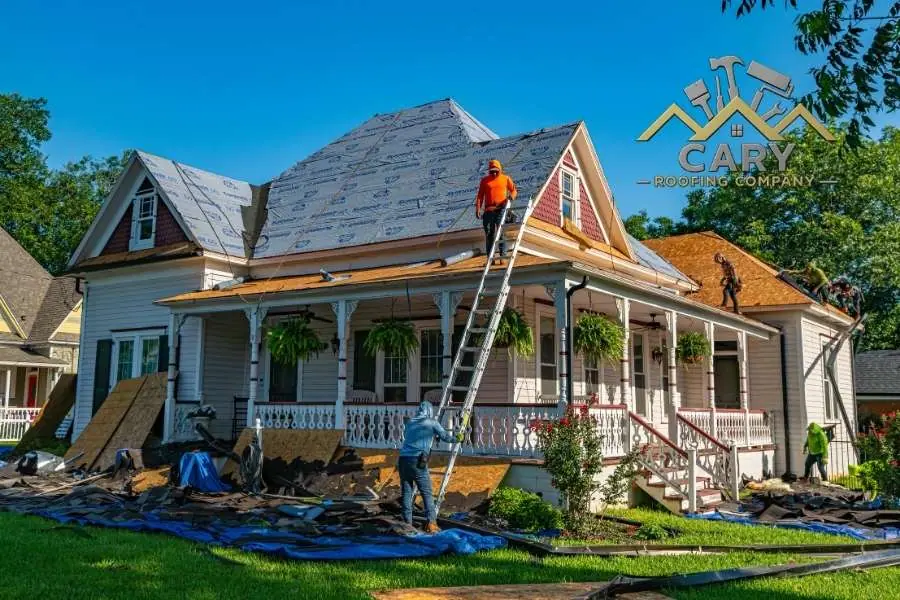
- Emergency roof tarp installation: a heavy-duty tarp is sized to cover past the damage, carried over the ridge when possible, and fastened with boards or battens so wind cannot get under the edges.
- Photo documentation: we photograph the damage before and after tarping for your records and insurance claim.
- Next steps: we explain the findings and schedule the inspection and written quote for roof leak repair or replacement.
Sometimes a full tarp is more than the situation needs, such as a few missing shingles. That brings up the question of patching.
At a glance
How to patch a roof without shingles?
A roof can be patched without new shingles by sealing the opening with roofing membrane, underlayment, roofing cement, or sheet metal. These are temporary fixes until matching shingles are installed.
Our crews choose the temporary roof patch based on the size and location of the damage:
- Peel-and-stick underlayment: self-adhering membrane over small areas of exposed decking. Works best on a dry surface.
- Roofing cement with reinforcing fabric: for small punctures, cracks, and nail holes.
- Sheet metal flashing: slipped under the course above a missing shingle to shed water.
- Plywood plus tarp: for holes through the decking, such as a limb strike, the opening is covered with plywood first and then tarped.
The table below shows how temporary and permanent repairs differ:
| Factor | Temporary repair (tarp or patch) | Permanent repair |
|---|---|---|
| Purpose | Stop water entry right away | Restore the roof system to working condition |
| Materials | Tarps, battens, membrane, roofing cement, sheet metal | Matching shingles or roofing material, underlayment, flashing, decking as needed |
| Timing | As soon as conditions are safe | After inspection, quote, and often insurance approval |
| Lifespan | Weeks to a few months | Years, depending on the roof |
| Weather tolerance | Can loosen in strong wind and break down in sun | Built to handle normal weather |
Many homeowners reach for a spray can at this stage, which is the next common question.
Can I spray flex seal on a leaking roof?
A rubberized spray sealant can briefly slow a very small leak on a dry, accessible surface. It is not a reliable emergency roof patch, and it will not work on a roof that is wet during rain.
Here is why we advise caution:
- Adhesion needs a clean, dry surface. Spray put on wet shingles or over granules often peels off.
- It misses the source. The water often enters some distance uphill from where the drip appears, usually at flashing or a lifted shingle.
- It can complicate permanent repairs. Coated shingles and flashing usually need to be removed, and the coating can hide the extent of the damage from an adjuster.
- It still means climbing the roof, which is the biggest risk in any emergency.
For residential and commercial buildings alike, a properly installed tarp or membrane patch holds up better. Commercial roofs have their own concerns, covered next.
Do you handle emergency commercial roof repair?
Yes. Cary Roofing Company provides emergency commercial roof repair for businesses across our service area, along with our full range of commercial roofing services.
Flat and low-slope commercial roofs fail differently from sloped residential roofs. Common emergencies include:
- Membrane punctures from hail, debris, or foot traffic around rooftop units
- Seams split open by wind uplift
- Clogged drains and scuppers causing ponding water and heavy loads
- Failed flashing at parapet walls, curbs, and penetrations
- Leaks over inventory, equipment, server rooms, or occupied tenant spaces
During a commercial emergency, our crews focus on stopping water entry with temporary membrane patches or sealing, clearing drains when it is safe, and documenting conditions for property managers and insurers. If you call, tell us the roof type if you know it, how the roof is accessed, and which interior areas are affected. After the building is secure, the next question is usually cost.
At a glance
How much does emergency roof repair cost in Cary, NC?
Emergency roof repair costs depend on how much damage there is, what the roof is made of, and how hard it is to reach safely. We provide a written quote after a free inspection instead of guessing over the phone.
| Cost factor | How it affects the price |
|---|---|
| Size of damaged area | Larger openings need bigger tarps, more material, and more labor. |
| Roofing material | Asphalt shingles, metal, tile, and commercial membranes each need different materials and methods. |
| Pitch and access | Steep roofs, multi-story homes, and limited access need more safety equipment and time. |
| Extent of damage | Rotted or broken decking, damaged rafters, or failed flashing add scope. |
| Tear-off | Removing damaged layers before the permanent repair adds labor and disposal. |
| Debris and tree removal | Limbs on the roof must be cleared before tarping or repair. |
| Permits | Larger repairs or replacements may require a permit from the local jurisdiction. |
| Temporary plus permanent work | Tarping and the final repair are separate scopes of work. |
Financing is available for qualifying projects, and our roof repair cost guide explains these factors in more detail. For storm damage, insurance may pay for much of the work.
Does insurance cover emergency roof damage?
Homeowners and commercial property policies often cover sudden, accidental damage such as wind, hail, or a fallen tree. They usually do not cover leaks caused by age, wear, or lack of maintenance. Your specific policy and deductible decide the outcome.
Many policies also expect you to take reasonable steps to prevent further damage, which is one reason prompt tarping matters. We help homeowners with insurance claims, and good documentation makes the process smoother:
- Photos and video: interior leaks, stained or fallen ceilings, damaged belongings, and exterior damage visible from the ground. Include wide shots and close-ups.
- Written notes: the date and time of the storm, when you first noticed the leak, and what you did to limit damage.
- Receipts: keep receipts for tarping, buckets, water cleanup, and any temporary housing.
- Damaged materials: hold on to fallen shingles or debris until the adjuster has seen them, if possible.
- Prompt notice: contact your insurer soon after the damage. Policies have reporting deadlines.
- Our documentation: the photos from our crew and the inspection findings can support your claim.
Whether you plan to file a claim or not, the first call to us goes faster when you have a few details ready.
What should I do when I call for emergency roofing?
When you call (919) 762-6226 for emergency roofing, tell us where the water is coming in, what caused the damage, and whether there are any safety hazards. That information lets us send the right crew and materials.
Have these details ready if you can:
- Property address and the best callback number
- Home or commercial building, and number of stories
- What happened: wind, hail, a fallen tree, or a leak with no clear cause
- Where water is entering and how fast
- Roofing material, if known (shingle, metal, flat membrane)
- Hazards such as downed power lines, a tree still on the roof, or a sagging ceiling
- Whether you have contacted your insurance company
- Gate codes, access notes, or tenant contacts for commercial properties
To see what we do beyond emergencies, view all roofing services in Cary, or contact Cary Roofing Company for non-urgent requests.
FAQ
Frequently asked questions
Is $500 expensive to replace roof flashing?
That depends on the flashing type, its location, and what else needs to be done. Chimney, skylight, and wall flashing each involve different amounts of work, and the price also changes if shingles must be removed and reinstalled or if the decking underneath is damaged. Compare quotes based on the written scope of work, not only the total. We provide a written quote after a free inspection.
How much does it roughly cost to replace a roof?
Replacement cost depends on roof size, material, pitch, the number of layers being torn off, decking repairs, and permits. Because these vary so much from house to house, we don't quote a number without seeing the roof. Our roof replacement cost page explains each factor, and a free inspection gets you a written quote.
How long can a roof tarp stay on?
A well-secured tarp is a short-term measure, generally good for weeks up to a few months. Sun exposure and wind wear tarps down over time, so schedule the permanent repair as soon as possible and check the tarp after every storm.
Who do I call after a storm damages my roof?
Call a roofing company for emergency tarping and an inspection, and notify your insurance company. In Cary and the surrounding area, you can reach Cary Roofing Company 24/7 at (919) 762-6226. If there are downed power lines, call your utility company first.
Is a temporary roof patch permanent?
No. A temporary roof patch stops water until a proper repair is done. Leaving it in place too long can let moisture get into the decking and lead to more extensive repairs later.
Should I go into the attic during a leak?
Only if you can do it safely. Step only on joists or a solid floor, never on the insulation between them. Avoid wet wiring, and bring a flashlight. Setting a bucket on a board under the drip can reduce ceiling damage. If the attic is hard to reach or the electrical wiring is wet, stay out and call us.
If your roof is leaking or storm-damaged, call Cary Roofing Company at (919) 762-6226. We answer 24/7, and every call can include a free inspection.
Why choose us
Why choose Cary Roofing Company?
Free estimates
Get a clear, no-obligation estimate before any work begins.
Licensed & insured
Your property and our crew are protected on every project.
Residential & commercial
One team for homes, multi-family and commercial properties.
Locally owned & operated
A local team serving your community and the surrounding area.
Get in touch
Find roofing help near you
Request a free estimate online or give us a call — our team will follow up quickly.
- Call us(919) 762-6226
- Visit150 Preston Executive Dr, Suite 201 a, Cary, NC 27513
- HoursMon-Sun: 7:00 am – 7:00 pm